The Path to a German Passport for International Citizens
For many people around the world, obtaining a German passport is a life-changing goal. As of 2026, the process remains governed by a series of recent and significant legal reforms aimed at balancing accessibility with high standards of integration. To successfully apply, it is essential to understand that a passport is the final step; you must first obtain German citizenship.
Key Pathways to German Citizenship
For people from other countries, there are three primary legal avenues to becoming a German citizen:
Naturalization (The Standard Route): This is the most common path for foreign residents living in Germany.
By Descent (Family Heritage): For those who have German ancestors or whose parents were German at the time of their birth.
By Marriage: Spouses of German citizens can apply under slightly more relaxed timeframe requirements.
The Naturalization Process in 2026
If you are a foreign national living in Germany, you must fulfill several strict criteria to be eligible for naturalization.
1. Residency Requirements
As of the latest 2024 and 2025 reforms, the standard residency requirement is 5 years of legal and habitual residence in Germany. It is important to note that the “fast-track” 3-year option (previously available for exceptional integration) was largely abolished in late 2025, returning the focus to a stable 5-year integration period.
2. Financial Stability and Housing
Applicants must demonstrate that they can support themselves and their dependent family members without relying on public welfare funds (Social Code II or XII). You must also have adequate living space for your family.
3. Language and Integration
Language Skills: You must prove proficiency in the German language at a B1 level or higher.
Naturalization Test: You must pass the “Life in Germany” test, which covers the country’s legal system, history, and social values.
Loyalty Declaration: You must declare your commitment to the free and democratic constitutional order of the Federal Republic of Germany.
How to Apply: Step-by-Step
Once you meet the eligibility criteria, the application process follows these official steps:
Initial Advice: Contact your local Staatsangehörigkeitsbehörde (Nationality Authority) for a preliminary consultation. They will provide the specific forms required for your district.
Document Submission: Gather your valid foreign passport, birth certificates, proof of income, and language certificates. These must often be translated into German by a certified professional.
Fee Payment: The standard fee for naturalization is €255 per person (€51 for minor children without their own income).
The Citizenship Certificate: If approved, you will be invited to a naturalization ceremony to receive your certificate. This document is the legal proof of your citizenship.
Applying for the Physical Passport
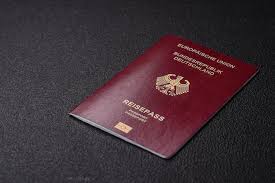
After receiving your citizenship certificate, you can finally apply for the German passport itself. This is done at your local Bürgeramt (Citizens’ Office).
In-Person Appointment: You must attend in person to provide biometric data, including fingerprints and a biometric photo.
Processing Time: A standard passport typically takes 4–6 weeks to arrive. If you need it sooner, an Express Service is available for an additional fee, usually delivering the document within 3–5 working days.
Important Note: Since 2024, Germany has fully embraced dual citizenship. You are generally no longer required to renounce your original nationality to become a German citizen, though you should check if your home country’s laws allow this.