1. Choose Your Pathway
Canadian residence permit: manages its immigration through several “streams,” each targeting different profiles. In 2026, the three primary routes include:
Express Entry: This is the flagship points-based system. It manages three federal programs: the Federal Skilled Worker Program, the Federal Skilled Trades Program, and the Canadian Experience Class (CEC). You are ranked using the Comprehensive Ranking System (CRS) based on age, education, work experience, and language skills.
Provincial Nominee Program (PNP): If you have skills that a specific province (like Ontario or British Columbia) needs, they can “nominate” you. A provincial nomination is powerful; it typically adds 600 points to your Express Entry profile, virtually guaranteeing an invitation to apply for PR.
Temporary Resident to Permanent Resident (TR to PR): A major 2026 initiative targets roughly 33,000 people already in Canada on work or study permits, allowing them to transition to PR status more quickly.
2. Prepare Essential Documentation
Before you can even create a profile, you must gather high-stakes documents. Missing or expired documents are the most common reasons for application rejection.
Language Proficiency: You must take an approved test like IELTS or CELPIP (for English) or TEF/TCF (for French). Results are generally valid for two years.
Educational Credential Assessment (ECA): If you studied outside Canada, an ECA from an organization like WES is required to prove your degree is equivalent to Canadian standards.
Work Experience: You need detailed reference letters from previous employers that list your specific job duties, matching them to Canada’s National Occupational Classification (NOC) codes.
3. The Application Process
Once your documents are ready, the process follows these general steps:
Step 1: Create an Online Profile
Enter your details into the IRCC (Immigration, Refugees and Citizenship Canada) portal. If you meet the minimum criteria, you enter a “pool” of candidates.
Step 2: Receive an Invitation to Apply (ITA)
Canada holds regular “draws” from the pool. If your CRS score is high enough, you will receive an ITA. In 2026, many draws are “Category-Based,” targeting specific sectors like healthcare, STEM, or trades.
Step 3: Submit the Final Application
You have 60 days from receiving an ITA to submit a complete electronic application. This includes paying fees (currently starting around $1,525 CAD for a single applicant) and uploading all supporting evidence.
4. Final Stages: Medicals and Biometrics
After submission, you will be asked to complete a medical exam with an IRCC-approved doctor and provide biometrics (fingerprints and a photo) at a designated center.
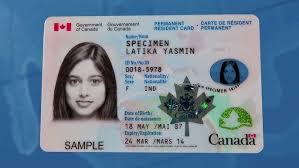
If approved, you will receive a Confirmation of Permanent Residence (COPR). If you are outside Canada, this allows you to travel to a port of entry to complete your landing. If you are already in Canadian residence permit, the process is often completed through an online portal, after which your physical PR Card will be mailed to you
